
Q2 2025 - 2025 Midyear Outlook
Peter Lynch, one of the greatest investors of the modern era, famously said, “I’ve always said, the key organ here isn’t the brain, it’s the stomach.” In essence, successful investing requires the courage to stay invested despite market fluctuations. One tool to gauge market fear and volatility is the VIX index, which typically moves in the opposite direction of the S&P 500. When fear increases, we see market sell-offs; as fear subsides, investors rush to buy, pushing the market higher. To illustrate this, I’ve compiled data with the help of one of our research tools, YCharts, and created a graph showing the number of days the VIX was above 30 and the number of days it surpassed 40.
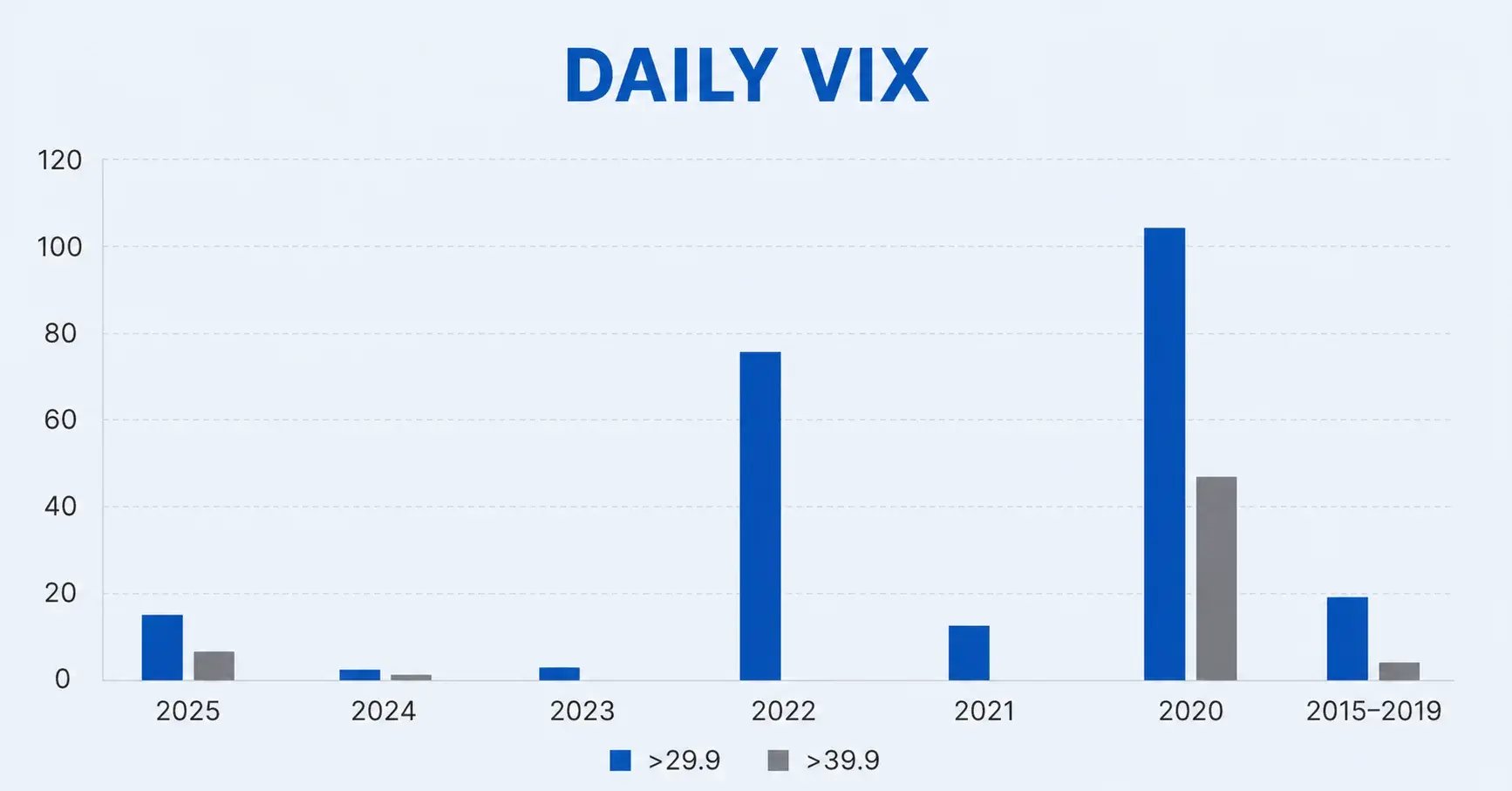
Halfway through the year, we’ve already seen this fear play out in the markets. Interestingly, the VIX has already climbed above 40 more times in 6 months than it did in total from 2015–2019 and 2021–2024 combined.
It’s worth reflecting on what happened in 2022 and 2023: inflation hit a 40-year high, recession fears were a constant dinner-table topic, and the tragic invasion of Ukraine further rattled markets. In 2023, we saw the collapse of Silicon Valley Bank, the largest bank failure since 2008, followed closely by the fall of Credit Suisse. Despite this news, the VIX never surpassed 40, and markets continued to climb to new all-time highs.
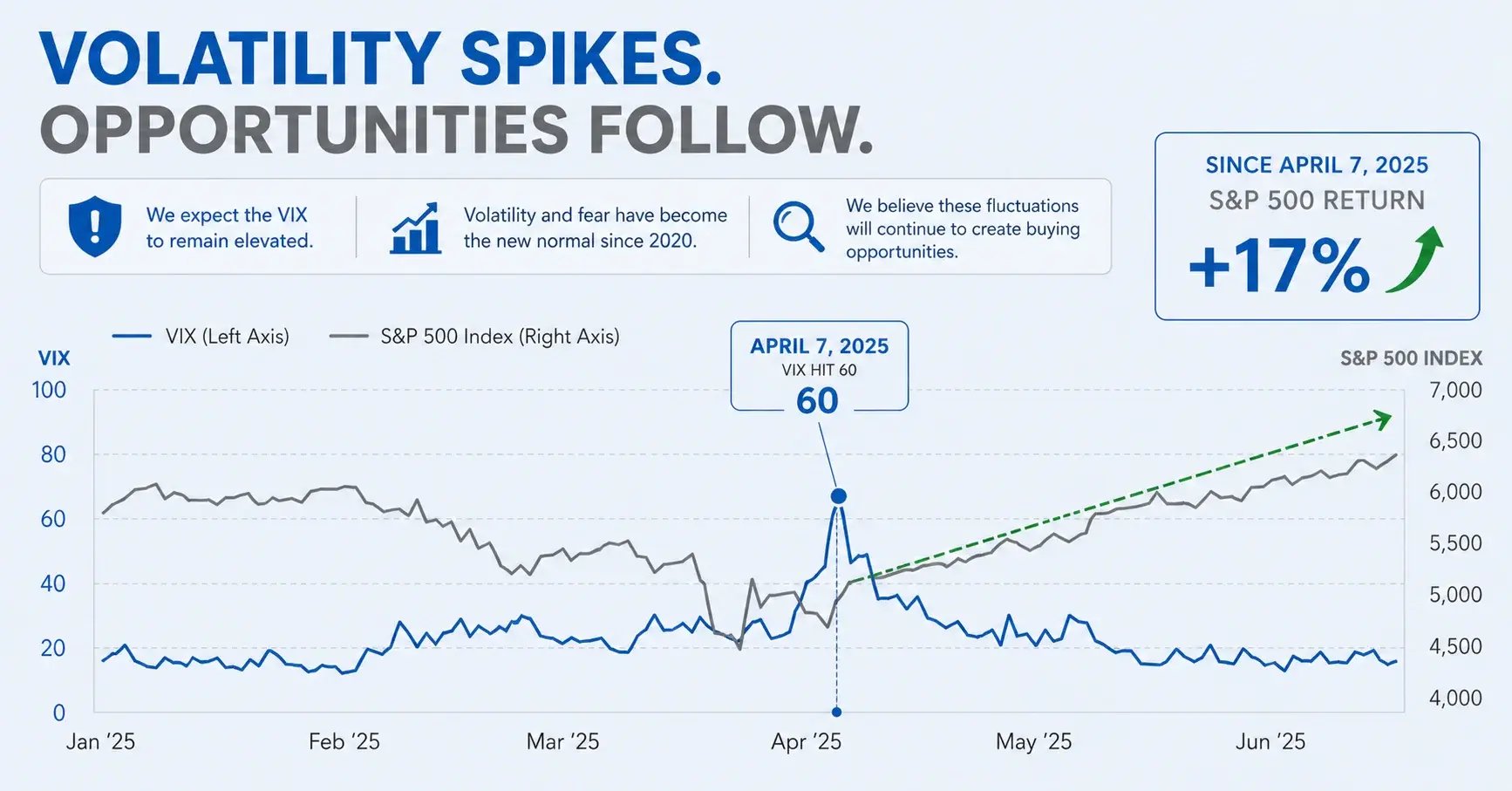
So, where does that leave us? We expect the VIX to remain elevated. Volatility and fear seem to have become the new normal since 2020, and investors are becoming more familiar and more accepting of these swings. We believe these fluctuations will continue to create buying opportunities. On April 7th of this year, the VIX hit 60. Since then, the S&P 500 has returned over 17%.
Sometimes, the best investment strategies are the most boring. When our investment committee met to review our models, we agreed that now isn’t the time to make a huge bet on any single stock or sector. We have rules and policies that guide us, and we will continue to abide by them. Earlier this year, we made a strategic overweight to large-cap and tech companies, and we still believe these are the best places to be. These companies are not only leading innovations but also tend to have extremely strong balance sheets.
Regarding fixed income, it’s widely believed there will be two rate cuts this year. The timing and size of those cuts remain uncertain. We’re slowly extending our duration, but we continue to have a strong overweight to the short end of the yield curve, where we think the most attractive risk/reward trade-off lies.
The final impact of these tariffs is still unfolding. What should you do as an investor? As news about tariffs changes by the hour, markets will continue to feel like a roller coaster. The best course of action is to ignore the headlines and remain focused on your financial plan. We remain optimistic about the U.S. economy and believe companies will continue to innovate and create value for shareholders. For long-term investors, we believe the equity markets remain the place to be.